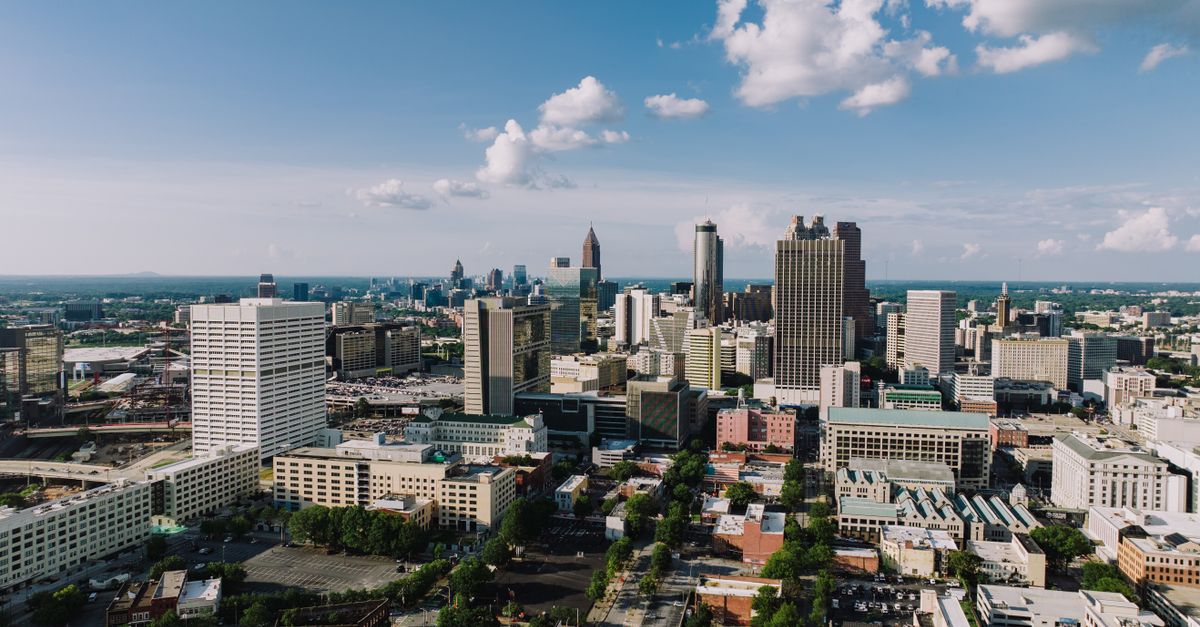
Atlanta recorded its sixth consecutive day above 98°F this week, pushing the Fulton County Emergency Management Agency to extend its heat emergency declaration through at least July 6. The city has opened 23 cooling centers across five counties. That number sounds adequate until you look at the map: most of them cluster inside the I-285 perimeter, leaving neighborhoods like Panthersville and South Fulton with thin coverage and residents dependent on MARTA routes that run every 30 minutes in the heat of the afternoon.
The urgency isn't abstract. France recorded more than 2,000 excess deaths at the peak of its current heatwave — a staggering toll that European health officials have spent years trying to reduce since 2003, when a single summer event killed roughly 15,000 people nationwide. Atlanta officials are watching those numbers closely, and they should be. Georgia's urban heat island effect is measurable and worsening: the Georgia Institute of Technology's Urban Climate Lab has documented a 4.2°F increase in Atlanta's average summer overnight low temperature since 1970, a figure that matters because nighttime heat is when bodies fail to recover.
What Atlanta Is Getting Right — and Where It Falls Short
The city's strongest asset right now is the Atlanta-Fulton County Emergency Management Agency's partnership with Grady Memorial Hospital, which activated its heat surge protocol on June 30. Grady, the region's primary safety-net hospital at 80 Jesse Hill Jr. Drive, has treated 214 heat-related visits since June 15 — up 31 percent from the same period in 2025. The hospital added a dedicated triage lane this summer after capacity problems in 2024.
The Atlanta BeltLine Conservancy has also kept all 22 miles of trail access points stocked with free water stations this week, a program funded through a $1.2 million Wellstar Health grant announced in April. That's a tangible, functioning piece of infrastructure. Phoenix, by comparison, operates 47 city-funded hydration stations year-round and spent $8.4 million on shade structure construction along its downtown trail network in fiscal year 2025 — a scale Atlanta hasn't matched. Madrid deployed a network of mist-cooling corridors along its Gran Vía shopping district in 2024 using municipal funds. Atlanta's Peachtree Street corridor has no comparable permanent installation.
The gap matters most in Old Fourth Ward and Mechanicsville, two neighborhoods where tree canopy coverage sits below 18 percent according to the City of Atlanta's 2023 Urban Tree Canopy Assessment. Residents there are absorbing heat that wealthier, greener neighborhoods like Druid Hills — where canopy coverage exceeds 60 percent — simply don't experience. The city's TreesAtlanta nonprofit planted 2,800 trees in low-canopy zones last year, but arborists estimate it takes 15 to 20 years for a planted sapling to meaningfully reduce surface temperatures.
The Comparison That Should Worry City Hall
Among U.S. peer cities with similar summer climate profiles, Atlanta trails Houston and Dallas on both per-capita cooling center capacity and public cooling infrastructure spending. Houston's Beat the Heat program, running since 2022 under Harris County's Office of Homeland Security, operates 61 designated facilities with dedicated transportation shuttles — a model Atlanta's city council was briefed on in February 2026 but has not funded. Dallas allocated $3.1 million to its 2025 Cool Zones initiative. Atlanta's equivalent budget line for the current fiscal year is $640,000.
Atlanta Mayor's Office of Resilience is expected to present an updated Heat Action Plan to the city council on July 15. The draft, circulated internally last month, calls for permanent cooling infrastructure along the BeltLine's Westside Trail and a shading pilot program for five bus stops in Vine City. Residents in the hardest-hit zip codes — 30310, 30314, and 30318 — shouldn't wait for that vote. The Fulton County cooling center hotline is 404-612-4000, and the closest 24-hour centers to those zip codes are at the C.T. Martin Natatorium on Northside Drive and the Adamsville Recreation Center on Donald Lee Hollowell Parkway.
This article was compiled by AI and screened before publishing. See our editorial standards.