Property
How Much Rent Is Too Much? The 30% Rule in Practice
Atlanta renters are hemorrhaging far more than the traditional affordability threshold, and the math is starting to force impossible choices.
4 min read
Updated 1 h ago
Property
Atlanta renters are hemorrhaging far more than the traditional affordability threshold, and the math is starting to force impossible choices.
4 min read
Updated 1 h ago
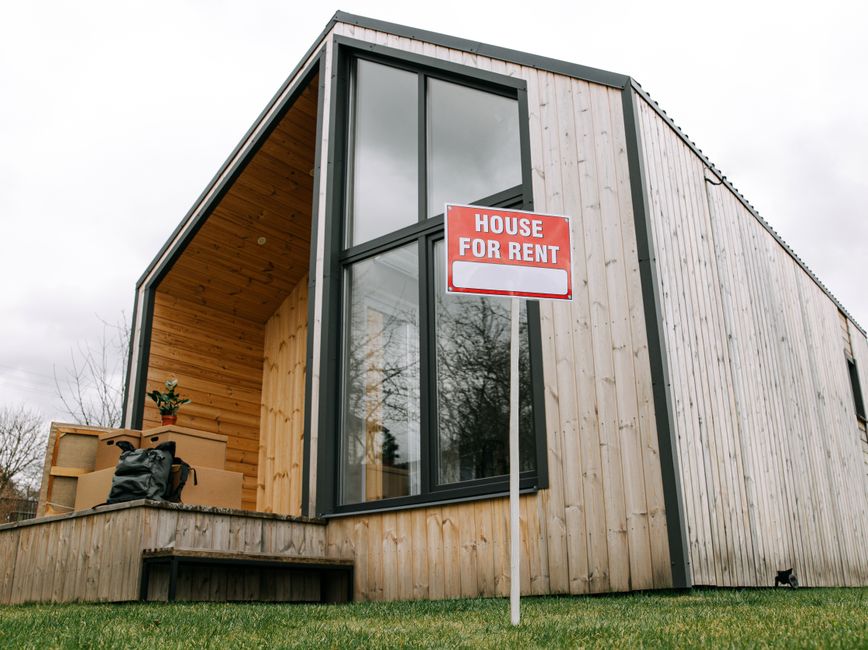
More than half of Atlanta's renters now spend above 30 percent of their gross income on housing costs, according to 2025 data compiled by the Atlanta Regional Commission — a threshold that federal housing policy has used as its affordability benchmark since the 1980s. With median asking rents in Midtown Atlanta sitting at $2,150 per month for a one-bedroom as of June 2026, a renter would need to earn at least $86,000 annually just to stay within that guideline. The city's median household income is roughly $72,000.
That gap matters right now because Atlanta's rental market shows no meaningful sign of cooling. The wave of apartment construction that was supposed to ease prices — roughly 12,000 new units delivered across the metro between 2023 and 2025 — absorbed quickly, particularly in high-demand corridors like the BeltLine's Eastside Trail and the Ponce City Market district. Meanwhile, the Federal Reserve's still-elevated interest rates have kept mortgage costs punishing enough that thousands of would-be buyers are stuck renting longer than they planned, intensifying competition at every price point.
The rule is blunt by design. Take your gross monthly income, multiply by 0.30, and that is your ceiling. Earn $5,000 a month before taxes — close to Atlanta's median — and your rent ceiling is $1,500. Try finding a one-bedroom for that in Old Fourth Ward or Inman Park in the summer of 2026. Listings in those neighborhoods are running $1,750 to $2,400 for anything built after 2010.
The pressure pushes renters outward. Areas like East Point and College Park along the MARTA Red and Gold lines have seen average rents climb 18 percent over the past 24 months, according to data from Georgia State University's Urban Studies Institute, as displacement from higher-cost in-town neighborhoods ripples southwest. A two-bedroom in College Park that was $1,200 in early 2024 is now routinely listed at $1,400 to $1,500. Still more affordable than Midtown, but the 30% rule is tightening there too for service workers and hospitality employees who staff Hartsfield-Jackson Atlanta International Airport.
The Atlanta Housing Authority administers roughly 24,000 housing choice vouchers across the metro, but the program's payment standards have lagged market rents by 12 to 15 percent for the past two years, meaning voucher holders cannot compete for units in many neighborhoods where landlords can easily rent to unassisted tenants at full market price.
The conventional advice — stop renting and build equity — runs into a wall of arithmetic. A median-priced Atlanta home hit $385,000 in May 2026, per Georgia MLS data. At a 30-year fixed rate of 6.85 percent with 10 percent down, the monthly principal and interest payment alone reaches $2,280, before property taxes, insurance or HOA fees that can add another $500 to $700 monthly in communities like Brookhaven or Smyrna. That total sits well above what the 30% rule permits for households earning under $120,000.
The result is a stuck market. Renters cannot save a down payment fast enough when 35 to 40 percent of their income is going toward rent. The Urban Land Institute's Atlanta chapter flagged this in its spring 2026 report, noting that the gap between what it costs to rent and what it costs to own the same unit type has narrowed to its smallest point in eight years — but narrowing from the wrong direction, with both options now unaffordable for moderate-income households.
For renters trying to apply the 30% rule practically, housing counselors at Invest Atlanta — the city's economic development authority, which runs a down-payment assistance program called the Homebuyer Incentive Program — recommend starting with a hard-line monthly budget before touring any property. They also point renters toward the City of Atlanta's Rent Assistance and Stability Program, which reopened its application portal on June 1 with a new income ceiling of 80 percent of Area Median Income. Neither program solves the structural problem. But in a market this tight, knowing exactly where your ceiling is before you sign a lease is the difference between financial pressure and financial crisis.
Property
Property
Property
Property
About this article
Published by The Daily Atlanta
Spread the word
Daily brief
Free, in your inbox before 7am. Weekdays.